For Him · For Her · No Filipiniana?

Kasuotan

dress code

Filipiniana, worn your way. Ecru is the recommended shade for the barong, with cream and earth tones alongside it, they read best against San Agustin’s stone and the folio’s own palette. Avoid stark white, that stays for the bride. Order or arrange rentals 6 or more weeks ahead, tailoring and embroidery both take time.

A practical note: Filipino formal wear was built for this exact climate. Barong fabrics are light and breathable by design, and a terno is no heavier than any other formal dress, both will suit the April heat far better than a full suit or a heavy gown would.

One stop recommendation: Kultura Filipino

If you only remember one name from this page, make it this one. Kultura Filipino sells barong, Filipiniana, and pretty much anything else Filipino you might want, souvenirs, pasalubong, home pieces, all in one place. It has physical stores inside most large SM malls, including SM Mall of Asia, so it is an easy, reliable stop if you are arriving early and would rather see and try things in person than order ahead.

For Him · Barong Tagalog
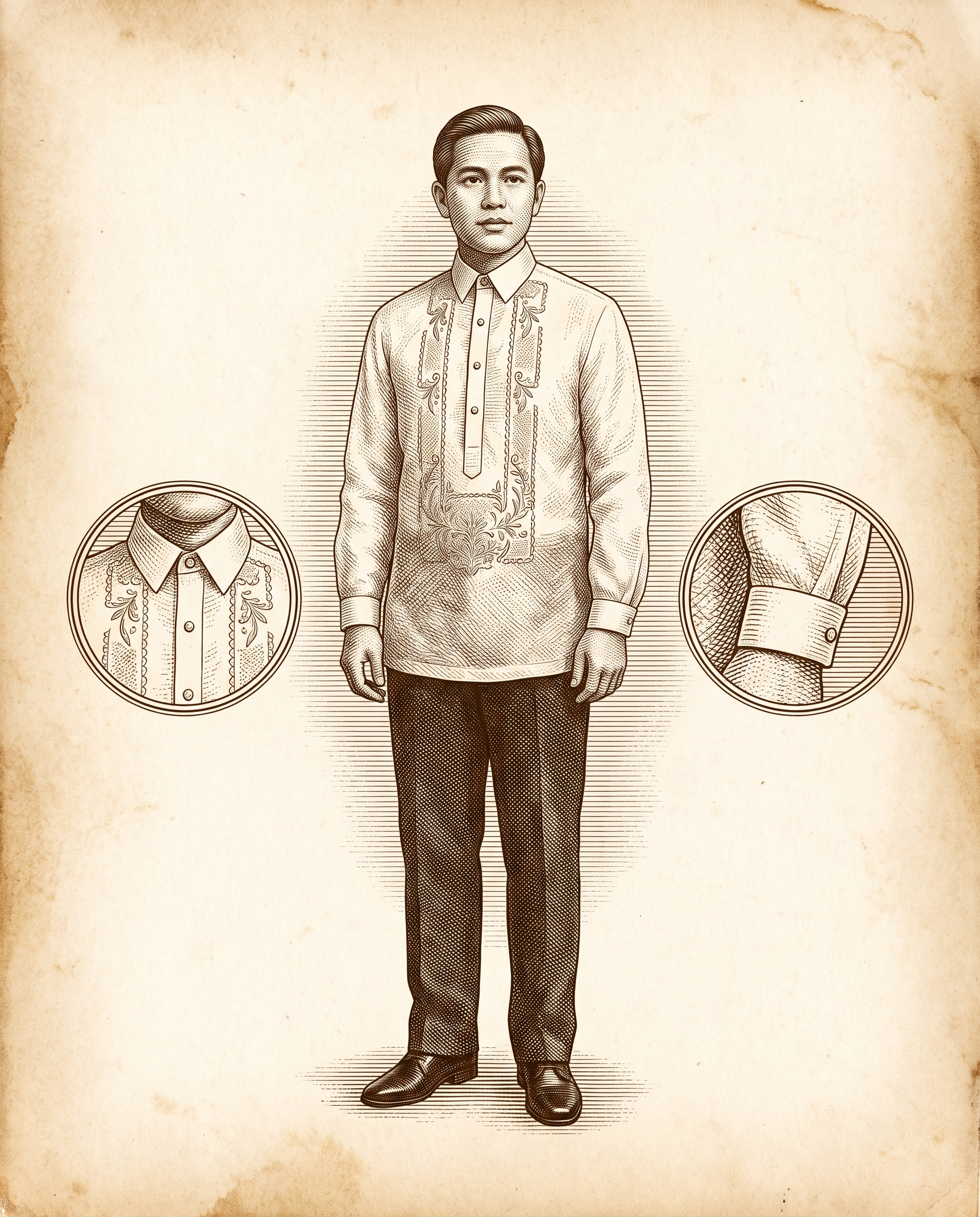
Engraving diagram of a barong tagalog, collar and cuff detail
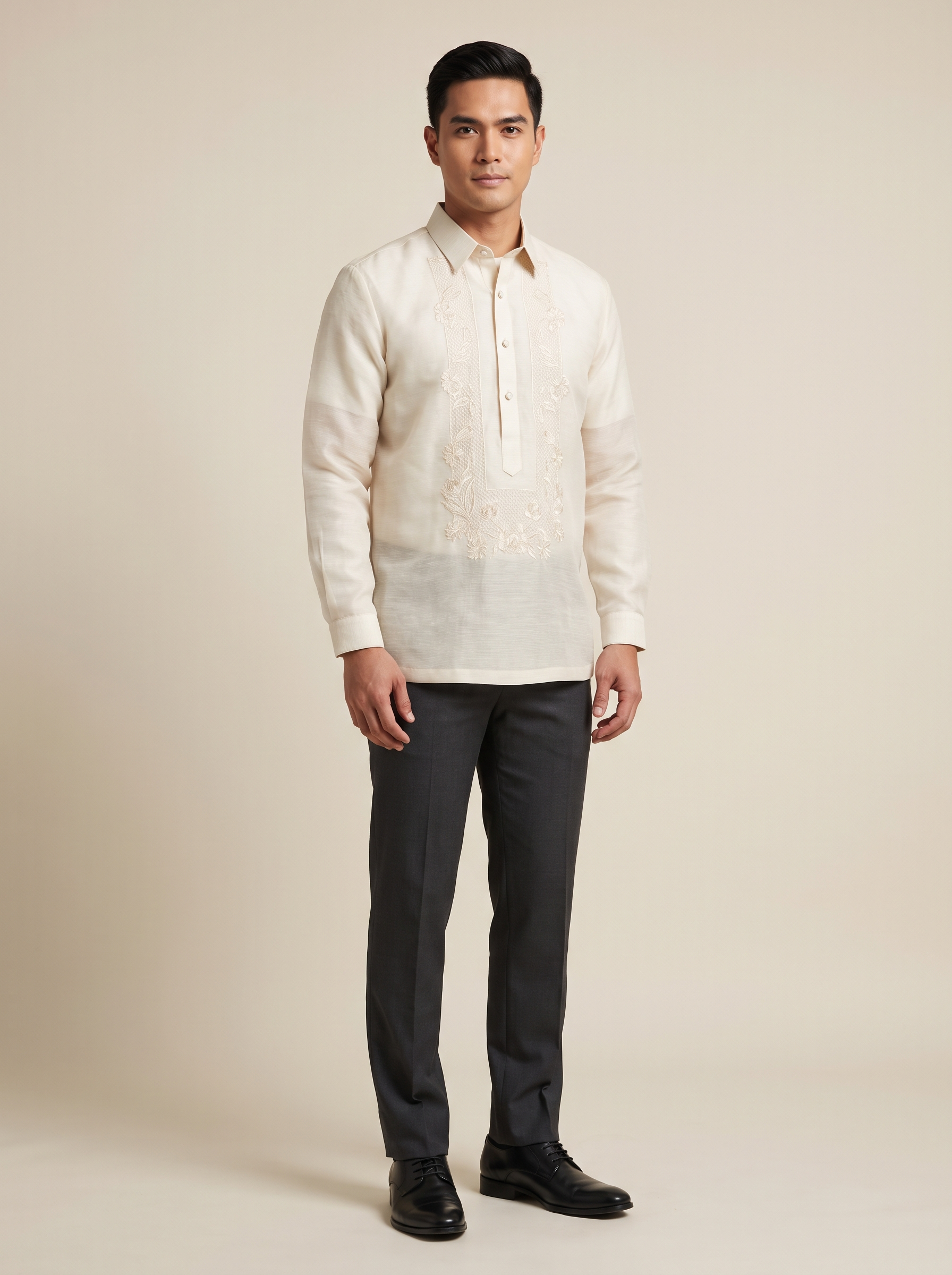
Photo reference of an ecru barong tagalog worn with dark slacks

The fabric, and what it costs

  • Organza, polyester and silk blend, sheer, the most affordable option. Roughly ₱1,500 to ₱3,000 (about AUD 45 to 90).
  • Jusi, woven silk, less transparent, a good middle ground of traditional look and practical price. Roughly ₱3,000 to ₱6,000 (about AUD 90 to 180).
  • Piña, handwoven pineapple fibre, the finest and most prized, breathable and delicate. From around ₱8,000 upward (AUD 240+), fine pieces run well beyond that.
  • Piña-Seda, pineapple and silk woven together, sits between jusi and pure piña on both look and price.

Prices are a rough guide only, they move with embroidery detail and maker. Worth confirming current pricing directly before ordering.

How to wear it

Untucked is not an accident, it is the whole design, the barong was never meant to disappear into your waistband. Button it all the way, or leave just the top one undone if you are feeling daring. Keep the sleeves down and unrolled even when the heat tries to talk you out of it, that fine fabric is doing its job. No jacket, no tie needed, congratulations, you are already fully dressed.

The undershirt, specifically

Barong fabric is sheer, so whatever you wear underneath is basically part of the outfit too, worth a little thought. A plain collarless camisa de chino is the traditional pick, no gym singlets, no crew necks with a logo peeking through. Plain white works fine, and nobody is out there measuring your sleeve length against the barong’s, a short sleeve undershirt under a long sleeve barong is completely normal.

Slacks & shoes

Dark, tailored trousers, charcoal or black, are all the bottom half needs to do, the barong is doing all the talking up top. Wear a belt if you like, nobody will ever know either way once the shirt covers it. Finish with polished black leather dress shoes, not sneakers, and not loafers with bare ankles.

Where to buy or rent

  • kulturafilipino.com, the most convenient option, the largest selection in one place, with physical stores inside SM department stores, good if you are arriving early and would rather try one on.
  • barongwarehouse.com, wide range of fabrics, ships internationally.
  • vintagallery.com, more tailored, higher end pieces.
  • barongsrus.com, good fabric guide if you want to understand the options before buying.
For Her · Filipiniana

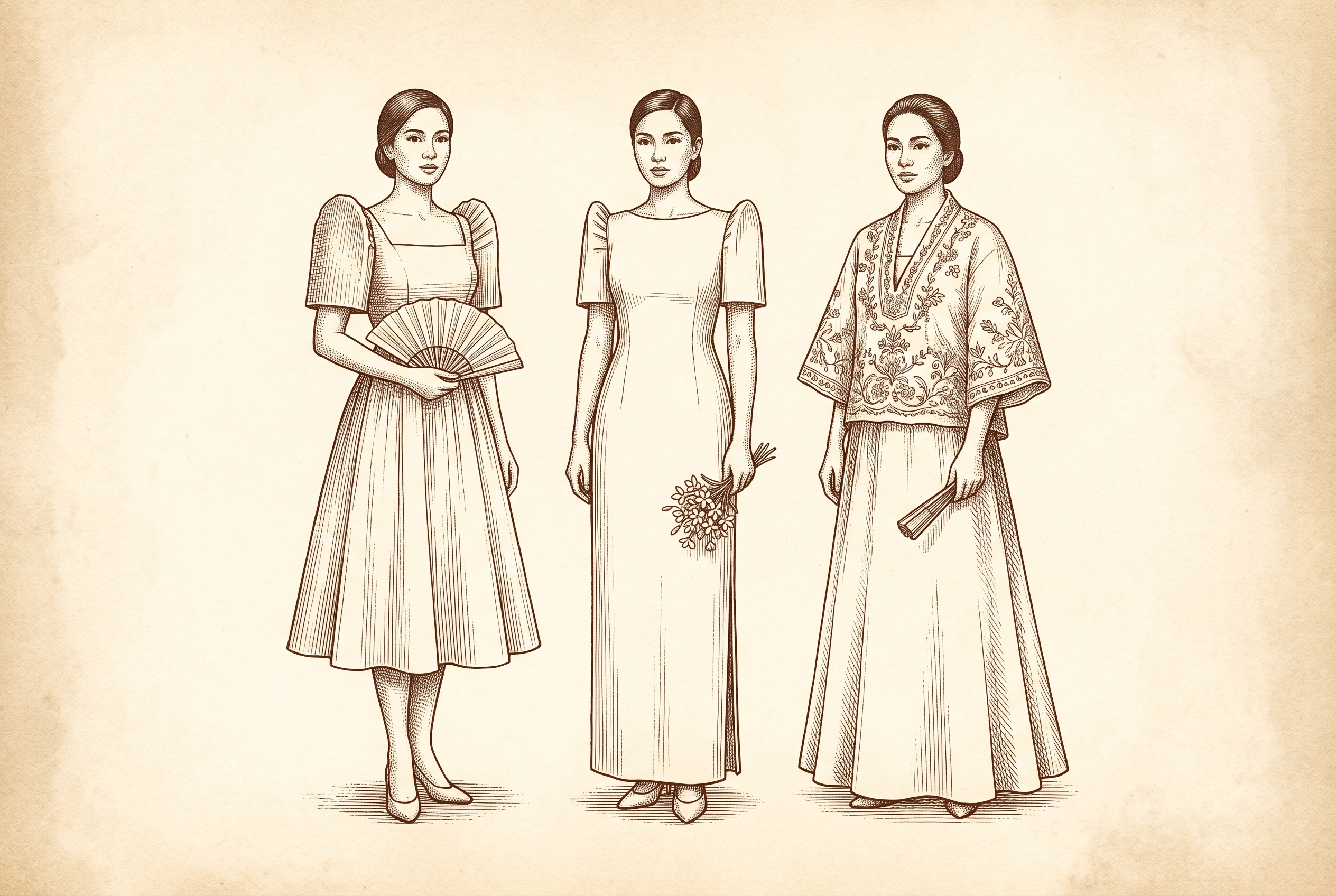
Engraving of three Filipiniana silhouettes, Maria Clara, modern sheath, and butterfly sleeve terno
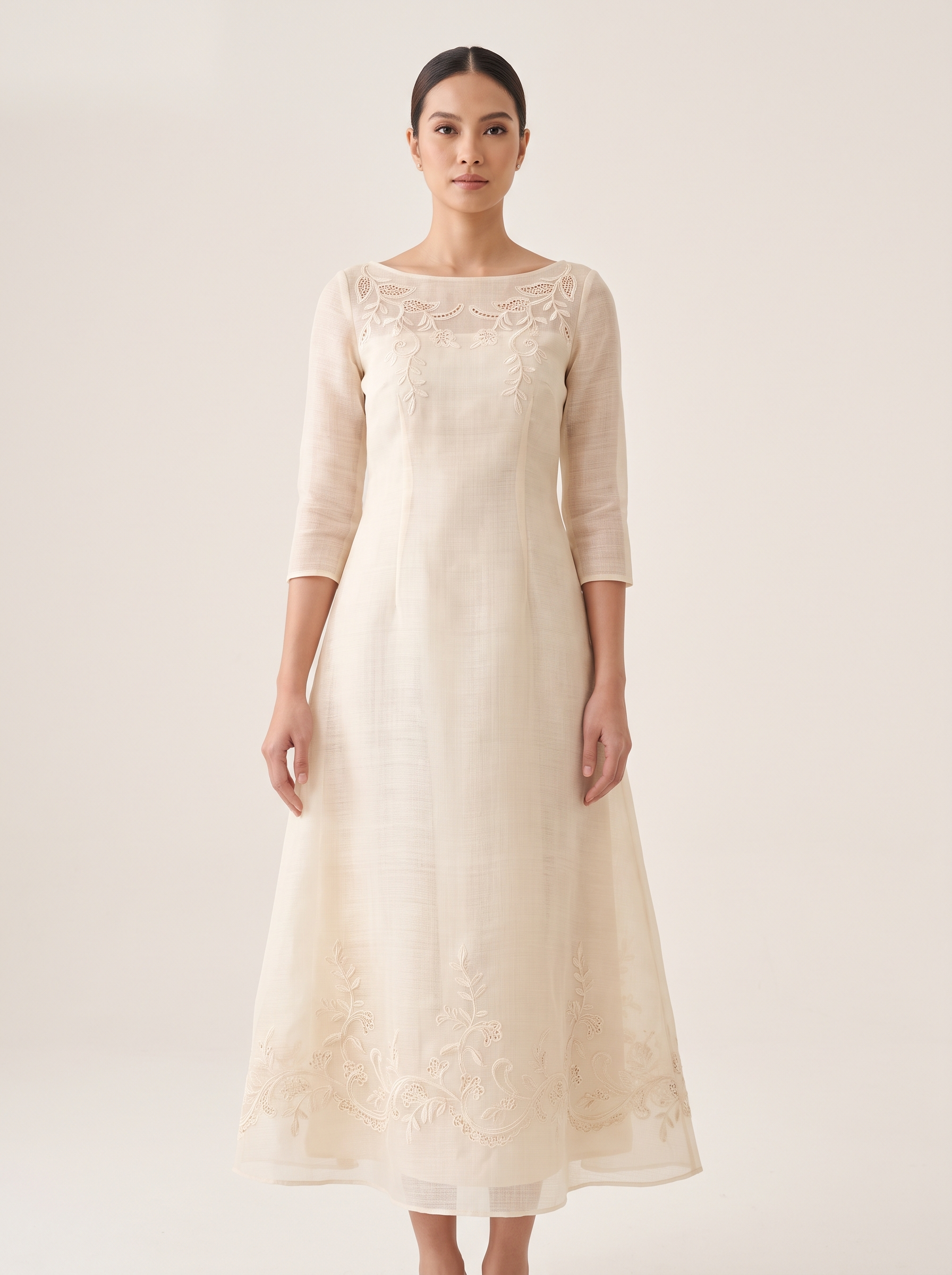
Photo reference of a modern ecru Filipiniana A-line dress with calado embroidery, no butterfly sleeves
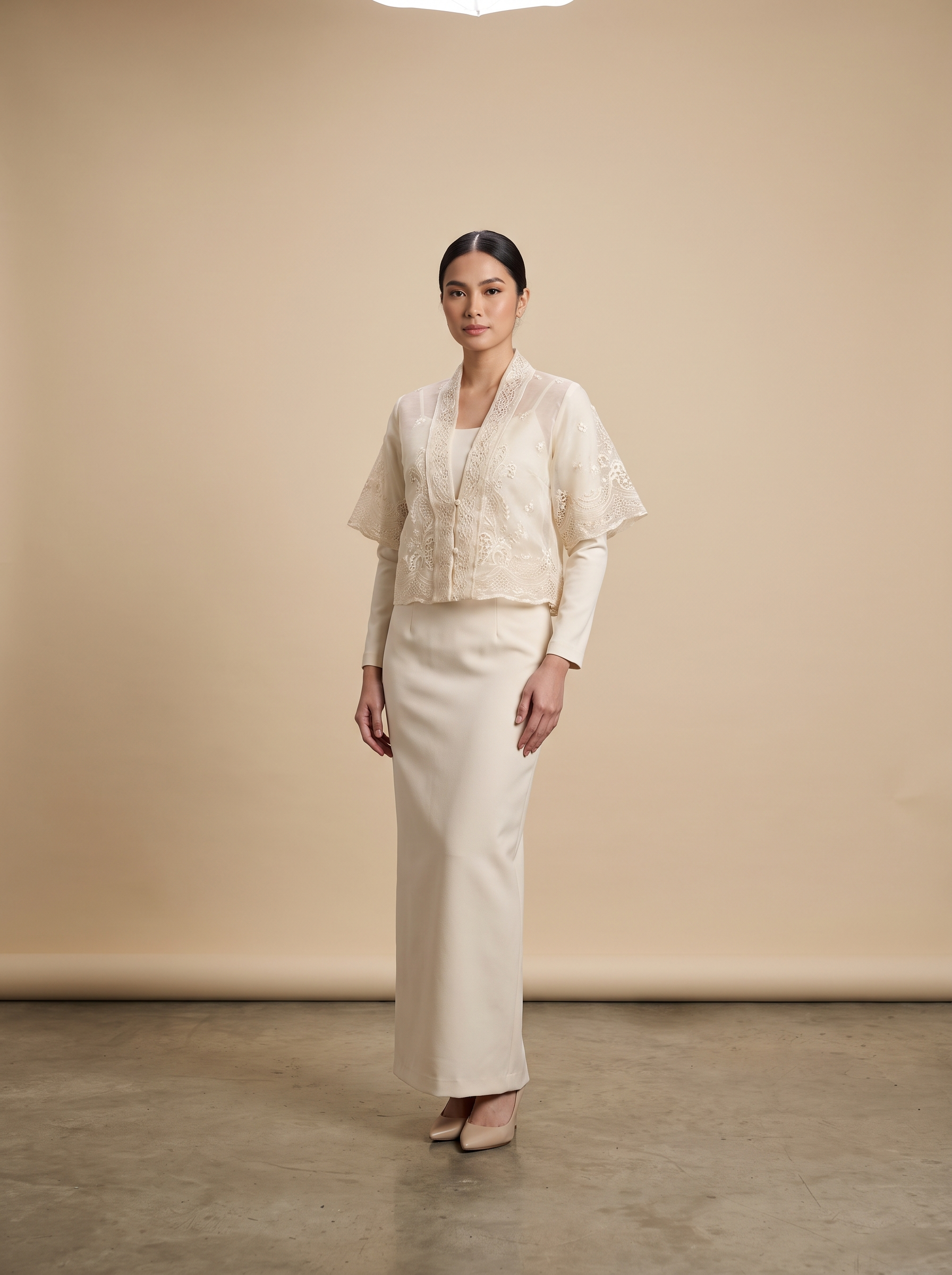
Photo reference of a modern ecru kimona blouse and skirt with calado embroidery, no butterfly sleeves
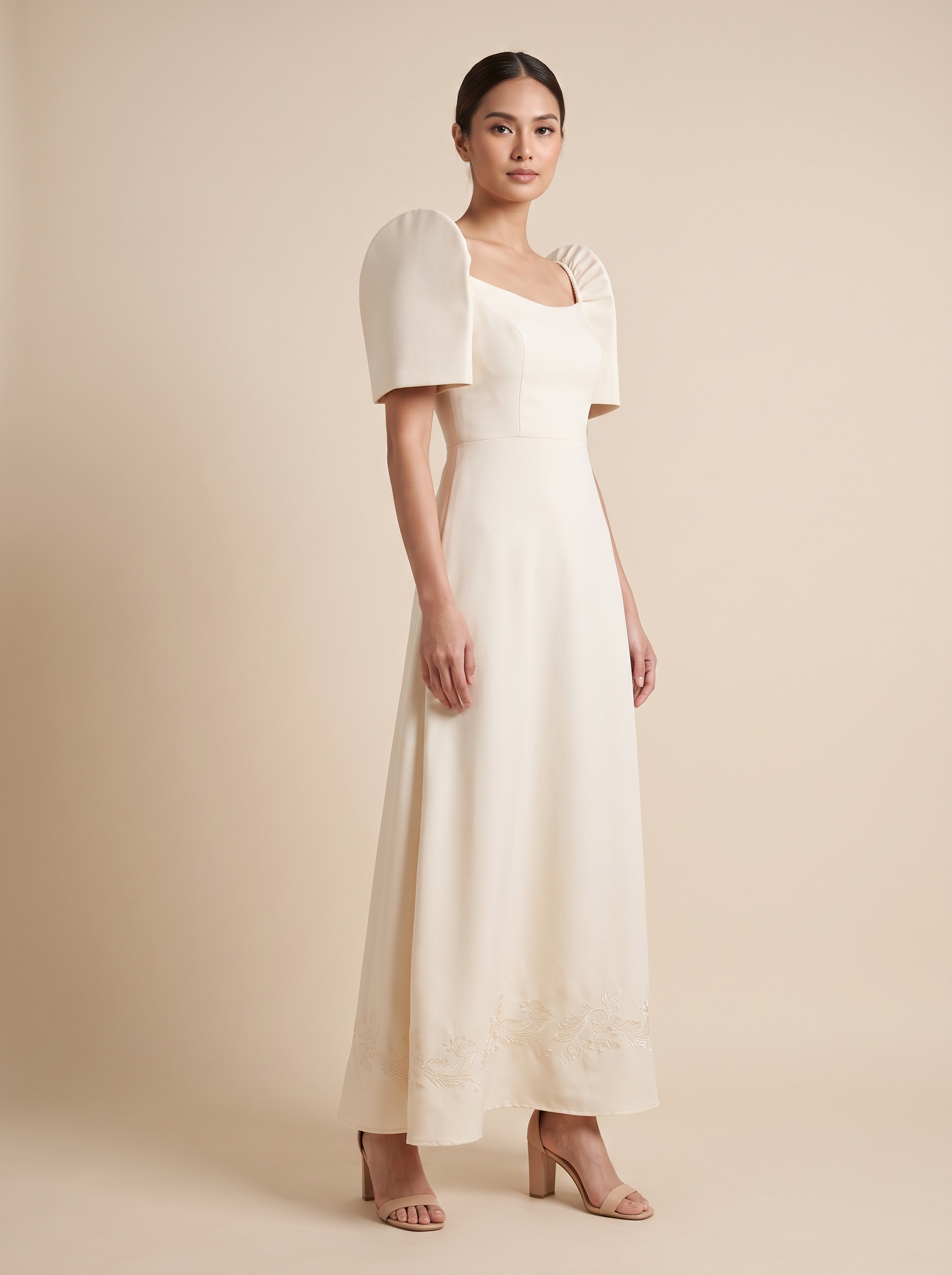
Photo reference of an ecru modern terno with butterfly sleeves

Left to right: modern A-line, no butterfly sleeves. Kimona blouse and skirt, no butterfly sleeves. The traditional butterfly sleeve terno.

Pick a silhouette based on how you want to feel

  • Fully modern, no butterfly sleeves at all, a plain elegant dress in the ecru or earth tone palette, maybe a subtle embroidered trim or a woven detail as the only nod to Filipiniana. Feels the most like an ordinary formal dress, the easiest option if the traditional silhouette just is not you.
  • Modern sheath terno, a fitted column silhouette with a soft puff sleeve, closer to contemporary evening wear. Feels sleek and minimal, the easiest style to accessorise simply.
  • Maria Clara, puffed sleeves, a fuller skirt, worn at tea length or long. Feels romantic and a little playful, easiest to move and dance in.
  • Traditional butterfly sleeve terno, structured wide sleeves, a full long skirt, often the most embroidered. Feels the most formal and the most directly Filipiniana, the one that reads most clearly as a terno from across the room.

There is no wrong answer here, and no obligation to go full traditional, wear the one that feels like you, all four are correct for the day.

Mixing and matching

The butterfly sleeves do not have to come attached to a full formal terno, a plain sheath dress with a detachable or separate butterfly sleeve topper is a common modern approach, and an easy way in if a full traditional terno feels like too much. A kimona (a light embroidered blouse) over a long plain skirt is another good middle ground, less structured, still unmistakably Filipiniana.

Colour & what to avoid

Ecru, champagne, dusty rose, sage, terracotta and burnt orange all sit well. Avoid pure white or ivory, that is reserved for the bride, and avoid anything so pale it competes with white under camera flash.

Price, roughly

  • Off the shelf, Kultura’s own modern Filipiniana line runs from about ₱2,000 up to ₱25,000 depending on embroidery and fabric, most everyday pieces sit in the ₱4,000 to ₱12,000 range (roughly AUD 120 to 360).
  • Custom made, a made to measure terno from a dressmaker costs more and needs more lead time, but fits properly and can match a colour exactly. Worth it if you already have someone you trust.

Where to buy

No Filipiniana on hand?

We do genuinely appreciate you making the effort to stick to the dress code, it makes a real difference to how the day looks and feels. If a full barong or terno is out of reach, the easiest middle ground is a Filipino accent added to clothing you already own, a piña or jusi pocket square, a small embroidered pin, a scarf or sash in the ecru and earth tone palette. It only takes one honest detail to fit right in.

If even that is not possible, formal, warm neutrals in the same ecru, earth tone and burnt orange family are the next best thing. Please avoid stark white, that stays for the bride.

And if you have formal traditional dress of your own, from your own country or culture, please wear it. It is a genuinely lovely thing to have in the room, and we would love to see it, provided it sits at the same formal level as everything else on the day. Where you have a choice in it, leaning toward a similar, more muted colour scheme, ecru, cream, earth tones, rather than bright or clashing colours, will help it sit beautifully alongside everything else rather than fight with it.